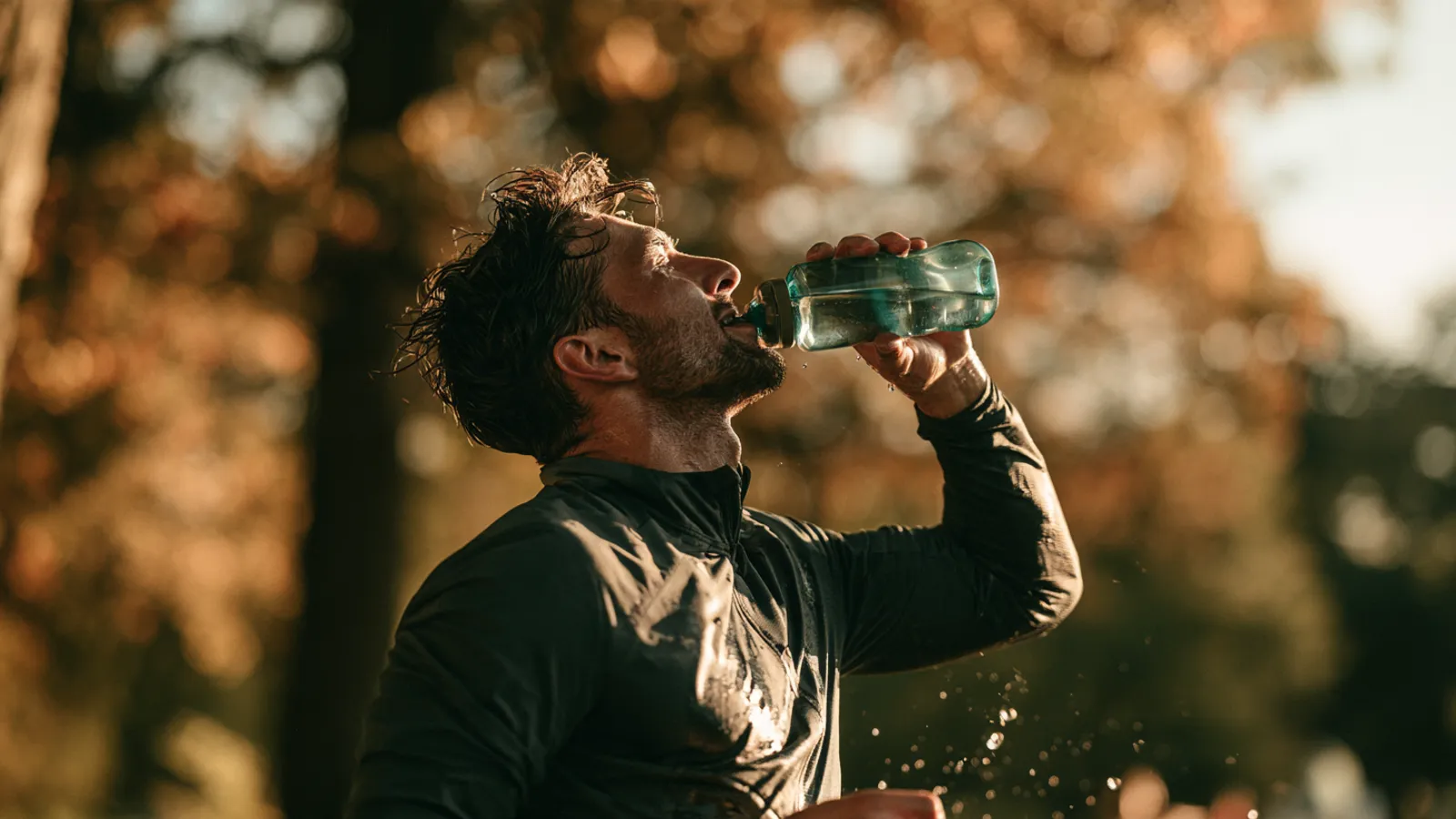
"Drink eight glasses of water a day" may be the most repeated health advice there is. Lately, social media has added new rules: drink it warm, drink it first thing on an empty stomach, stir in a pinch of salt. So how much water do you actually need, and do any of these habits matter?
Here's what the evidence says, and three simple ways to check you're drinking enough without counting glasses.
Is "8 glasses a day" backed by science?
Not really. In 2002, a researcher reviewed the evidence behind the advice to "drink at least eight 8-ounce glasses of water a day" and found no scientific studies supporting it.1 Surveys of healthy adults suggested that such large amounts aren't needed, and studies showed that caffeinated drinks count toward the daily total too. He was careful about the limits of that conclusion: it applies to healthy adults in a mild climate who aren't very active. People doing hard physical work or exercise, especially in the heat, need more.1
A much larger 2022 study measured how much water the body uses and replaces each day ("water turnover") in more than 5,600 people from 23 countries. Turnover varied with age, body size, physical activity, pregnancy and climate, including temperature, humidity and altitude.2 The authors concluded that one size doesn't fit all, and that the common suggestion to drink eight 8-ounce glasses a day (about 2 litres) isn't backed by objective evidence.2
How much water do most adults need?
The most widely used reference values come from the US National Academies. Women who appear well hydrated take in about 2.7 litres of total water a day and men about 3.7 litres, from all drinks and foods combined.3 About 80% of that comes from drinks, including caffeinated ones, and 20% from food. So in practice, that's roughly 2.2 litres of drinks a day for women and 3 litres for men. These amounts cover the needs of healthy, inactive people in mild climates.3
Just as important, the expert panel concluded that the vast majority of healthy people meet their daily needs by letting thirst be their guide, along with the drinks they normally have at meals.3
UK advice is expressed differently but lands in a similar place. The NHS suggests aiming for 6 to 8 cups or glasses of fluid a day, as a guide rather than a rule.4 Water, lower-fat milk and lower-sugar drinks, including tea and coffee, all count, and food provides some fluid too. Keep fruit juice and smoothies to one small glass (150 ml) a day, because they're high in sugar.4
What about coffee making you pee? That effect may be short-lived, with no convincing evidence that caffeine leads to an overall water deficit, so caffeinated drinks can count as much as non-caffeinated ones.3
Why your number is different
The 2022 study gives a feel for how much needs vary. With everything else equal, athletes turned over about 1 litre more water a day than non-athletes, and hot weather (around 30 °C) added about 1 litre compared with cool weather. Bigger bodies, higher altitude and late pregnancy raised it too.2 Not all of that has to come from drinks: food and the water your body makes as it burns energy cover part of it.2
At the extreme, very active people who are constantly exposed to hot weather can need 6 litres or more of total water a day.3
Three simple checks
Instead of counting glasses, use these:
- Thirst. For most healthy people, drinking to thirst plus a drink with meals is enough.3
- Pee colour. Aim for pale yellow. Feeling thirsty, a headache, feeling light-headed and dark yellow, strong-smelling pee are all signs of dehydration.5
- Your situation. You may need more if you're in a hot environment, physically active for long periods, pregnant or breastfeeding, or ill.4 Older adults have a higher risk of dehydration, so it's worth keeping drinks within easy reach.5
The NHS advises getting urgent medical advice if you feel unusually tired, feel dizzy when you stand up and it doesn't go away, or are peeing less than normal, as these can be signs of serious dehydration.5
Winter: less thirsty, still need to drink
Cold weather can quiet your thirst. In a small lab study, men exposed to cold felt up to 40% less thirsty than in warm conditions, both at rest and while walking, whether or not they were already dehydrated.6 So in winter, thirst can be a less reliable guide than usual. Keep having a drink with every meal and glance at your pee colour now and then.
How much water to drink when exercising
For most workouts you don't need a complicated plan. The American College of Sports Medicine's advice comes down to three steps:7
- Before: start your session well hydrated. Normal meals and drinks usually cover it. If you need extra, drink it at least several hours before, not just as you walk in.
- During: the aim is to avoid losing more than about 2% of your body weight through sweat. Sweat rates vary a lot between people, so there's no single amount that fits everyone.
- After: replace the fluid you lost.
Try the sweat check. Weigh yourself in minimal clothing before and after a typical session. That's how you can estimate your own sweat loss.7 Each kilogram lost is roughly a litre of fluid. For a 70 kg person, 2% is 1.4 kg. If you regularly lose more than that, drink a little more during the session. If you weigh more after training than before, you drank more than you lost.8
Drinks with electrolytes and carbohydrate can have advantages over plain water in certain circumstances,7 typically long sessions with heavy sweating.
Can you drink too much water?
Yes, but it's rare. Drinking far more than your body needs can push the sodium level in your blood too low, a condition called hyponatremia.8 The National Academies note that some athletes doing strenuous activity, and some people with certain psychiatric conditions, occasionally drink amounts that can be life-threatening, but that this is highly unusual.3
In sport, it was first seen in endurance athletes such as ultrarunners and Ironman triathletes, and later in marathon runners. The most common cause is drinking well beyond thirst, and following your thirst appears to be a safe and effective guide.8 In other words, there's no need to force down water on a schedule.
If you have a heart or kidney condition, or your doctor has asked you to limit fluids, follow their advice rather than any general target.
Trend check: empty stomach, warm water, salt water
Water on an empty stomach. After a night's sleep you've gone hours without a drink, so a glass of water when you wake up is an easy habit to build. But we couldn't find good-quality trials showing that drinking it on an empty stomach has special benefits. What counts is how much you drink across the day.
Warm or hot water in the morning. We couldn't find good evidence that warm water is better for you than cold. Drink it at whatever temperature you enjoy, because that's the water you'll actually drink.
Salt water. Adding salt to your water adds sodium most people don't need. The WHO recommends adults have less than 5 g of salt a day, just under a teaspoon, but the global average is about 11 g. Diets high in sodium raise blood pressure, which increases the risk of cardiovascular disease.9
Lemon water. If a slice of lemon helps you drink more, go for it. It's still water.
How to start this week
- Drink with every meal, and keep a glass or bottle where you'll see it.
- Check your pee colour once or twice a day. Pale yellow means you're on track.
- Do the sweat check before and after one workout.
- Keep moving through winter. On cold or rainy days, a treadmill walk still counts toward your daily steps. If you're ready to add strength training, the 3-Day Full Body program is a good place to start, and you can follow it in the TrainSmart app.
Most healthy adults don't need to count glasses. Drink when you're thirsty, have something with meals, check the colour, and drink a little more when it's hot or you're sweating hard.