Most people think of core training as crunches and sit-ups, which train your abs to curl your trunk forward. But in everyday life your core mostly does the opposite job: it keeps your trunk steady while your arms and legs move, while you carry the shopping or when something pulls you off balance.
Core-stability exercises train that job. This guide covers four of the most useful ones (the dead bug, bird dog, Pallof press and loaded carries), with how to do each one, easier and harder versions, and a short routine you can add to any workout.
What your core does
Your core is more than your abs. Mayo Clinic describes it as the muscles around your trunk, including your pelvis, lower back, hips and stomach. Core exercises train these muscles to work together, which leads to better balance and stability.1 A stronger core also makes everyday movements easier, from bending down to tie your shoes to reaching for a glass on a high shelf.1
Core work belongs in your weekly strength training, too. The CDC recommends muscle-strengthening activities on at least 2 days a week that work all the major muscle groups, and the abdomen is on that list alongside the legs, hips, back, chest, shoulders and arms.2
Each of the four moves below challenges your trunk in a different way:
- Dead bug: keep your lower back from arching while your arms and legs move.
- Bird dog: keep your back and hips level while you reach with the opposite arm and leg.
- Pallof press: stop a band or cable from twisting you.
- Carries: stay tall and steady while you walk with a heavy load.
1. Dead bug
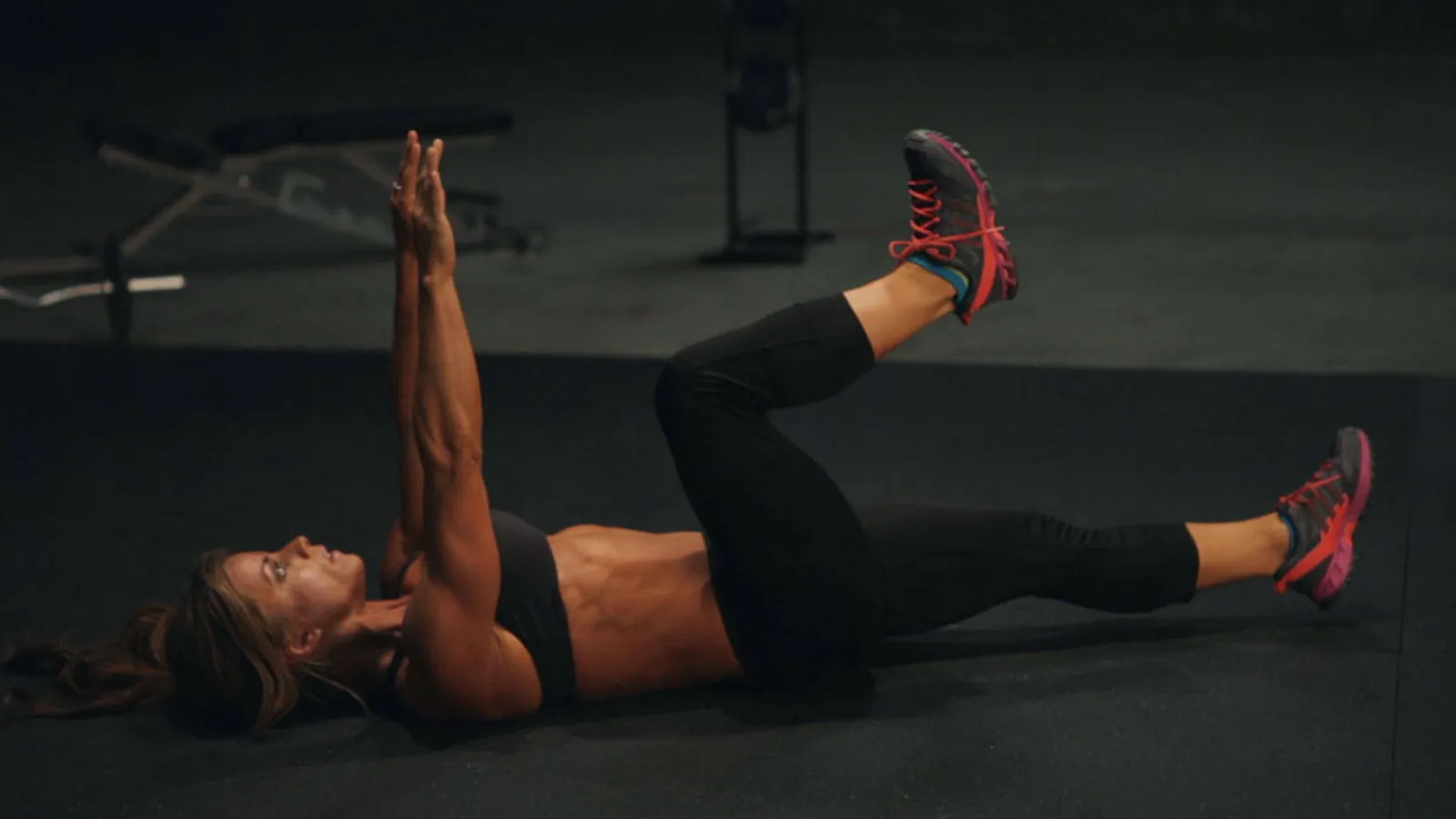
Lie on your back with your arms pointing at the ceiling and your hips and knees bent at 90 degrees. Breathe out fully to bring your ribs down, and gently press your lower back toward the floor. Slowly straighten one leg until it's just above the floor while you lower the opposite arm overhead, without letting your lower back lift. Return and switch sides. Do 2–3 sets of 6–10 per side, slowly. Check your position with the animated dead bug demo.
- Easier: move only your legs, or keep the knee bent and tap your heel to the floor.
- Harder: move more slowly, pause for 2 seconds at full reach, or hold a light weight in your hands.
These levels make a real difference. When researchers recorded trunk muscle activity during the dead bug and the bird dog at five graded levels of difficulty, muscle activity generally rose with each level.3 So you can start wherever you are and step up as you get stronger.
2. Bird dog
Start on your hands and knees, with your hands under your shoulders, your knees under your hips and your back flat. Brace your stomach as if you were about to be poked in the belly. Slowly reach one arm forward and the opposite leg back until both line up with your trunk, without your hips tipping or your lower back sagging. Hold for 3–5 seconds, return and switch sides. Do 2–3 sets of 6–10 per side.
- Easier: move only an arm, or only a leg.
- Harder: hold each rep for up to 10 seconds, or bring your elbow and knee together under your body between reaches.
In the same graded study, the harder bird dog levels especially increased activity in the multifidus and erector spinae, the muscles that run along your spine.3
3. Pallof press
Set a cable handle or a resistance band at chest height. Stand side-on to it, far enough away that there's tension, with your feet hip-width apart and your knees slightly bent. Hold the handle against the middle of your chest, then press it straight out until your arms are fully extended. The band will try to turn you toward the anchor: don't let it. Hold for 2–3 seconds, bring the handle back to your chest and repeat, then switch sides. Do 2–3 sets of 8–10 per side. Watch the Pallof press demo.
You can make it harder without adding weight, just by changing your stance. A study that tracked how much the pelvis moved during different versions of the Pallof press found that kneeling was the most stable position. Standing, and especially standing with one foot in front of the other (a tandem stance), made the exercise more demanding.4 A good progression is kneeling, then standing, then a tandem stance, and only then a stronger band or a heavier cable.
4. Carries: farmer's walk and suitcase carry
Farmer's walk: hold a heavy dumbbell or kettlebell in each hand, stand tall with your shoulders back and down, and walk with short, steady steps for about 30 seconds or 20–30 metres. Keep breathing. See the farmer's walk demo.
Suitcase carry: the same walk with a weight in one hand only. Now your trunk also has to stop you leaning toward the weight, so keep your shoulders level and walk tall.
One-sided loads ask a lot of your trunk. In a lab study from spine researcher Stuart McGill's team, carrying 30 kg in one hand put more compression on the lower back than carrying 30 kg in each hand.5 So start the suitcase carry with a lighter weight than your farmer's walk, build up gradually and switch hands every round.
A 10-minute core routine
Do this 2–3 times a week, at the end of a workout or on its own:
- Dead bug: 2–3 × 6–10 per side
- Bird dog: 2–3 × 6–10 per side, 3–5-second hold
- Pallof press: 2–3 × 8–10 per side, 2–3-second hold
- Farmer's walk: 2–3 × 30 seconds
- Suitcase carry: 2 × 20–30 seconds per hand
Rest 30–60 seconds between sets. These are strength exercises, so treat them like it: when a set feels easy, move up one level. Change one thing at a time, such as a slower tempo, a longer hold, a harder version or a heavier weight. End each set when you can no longer keep your lower back and hips still.
Will core exercises fix back pain?
They can be part of the answer, but they're not magic. Mayo Clinic notes that strengthening your core may help back pain get better and lower the risk of falls.1 However, exercises that specifically target trunk control haven't proven better than other types of exercise for long-term low back pain. A Cochrane review of 29 trials with 2,431 people found that this kind of training, called motor control exercise, gave similar results to other forms of exercise. The authors concluded that the choice of exercise should depend on preference, cost and safety.6 In practice, the best exercise is the one you'll keep doing, and core work fits well alongside walking and full-body strength training.
If you have back pain, the NHS advises staying active and trying exercises and stretches, but stopping if the pain gets worse.7 See a GP if it doesn't improve after a few weeks of treating it at home, or if it stops you doing everyday activities. Get emergency help for warning signs such as tingling, weakness or numbness in both legs, or changes in bladder or bowel control.7
How to start this week
- Learn the floor moves first. Do the dead bug and bird dog on two days this week, using the easiest version you can do with full control.
- Add the Pallof press and carries at the gym. At home, a resistance band anchored to something sturdy works for the Pallof press, and two heavy shopping bags will do for a first carry.
- Write down your levels (which version, how many reps, what weight) so you know when to step up.
- Put it into a program. The 4-Day Upper / Lower program already ends both lower-body days with core work (hanging leg raises and cable crunches). Add this routine after those, or swap one of them for it, and follow the plan in the TrainSmart app with an animated demo for every exercise.
A few minutes, two or three times a week, is enough to build a steadier trunk that backs up everything else you do in training and in daily life.