Walking into a gym for the first time can feel as if everyone else got a manual you didn't: rows of machines, racks of barbells and no obvious place to start. The good news is that a beginner needs much less than the gym seems to offer. A handful of big exercises, done well three times a week, is enough to get noticeably stronger.
This guide gives you a complete plan, the 3-Day Full Body program, with every exercise, set and rep. It also covers how to choose your weights, when to add more and how to stay safe while you learn. It works the same way for women and men.
How much strength training do you need?
The World Health Organization recommends that adults do muscle-strengthening activities at moderate or greater intensity, working all the major muscle groups, on 2 or more days a week.1 The NHS spells out what that means: legs, hips, back, abdomen, chest, shoulders and arms, with lifting weights listed as one of the ways to do it.2
For people who are new to lifting, the American College of Sports Medicine (ACSM) recommends training 2–3 days a week.3 Three full-body sessions put you at the top of that range, and they mean every major muscle gets trained three times a week. That's useful: a review of studies that compared training frequencies, with the total amount of work kept equal, found that training a muscle group twice a week built more muscle than training it once.4 Whether three times beats twice isn't settled yet,4 but a full-body plan has a practical bonus. If you miss a session, every muscle still gets trained twice that week.
The plan: 3-Day Full Body
Train on three non-consecutive days, such as Monday, Wednesday and Friday, and rest or go for a walk on the days in between. Each session has six exercises. The big lifts that work several joints come first and the smaller, single-joint exercises come last. That's the order the ACSM recommends, so you do the most demanding lifts while you're freshest.3
Day A
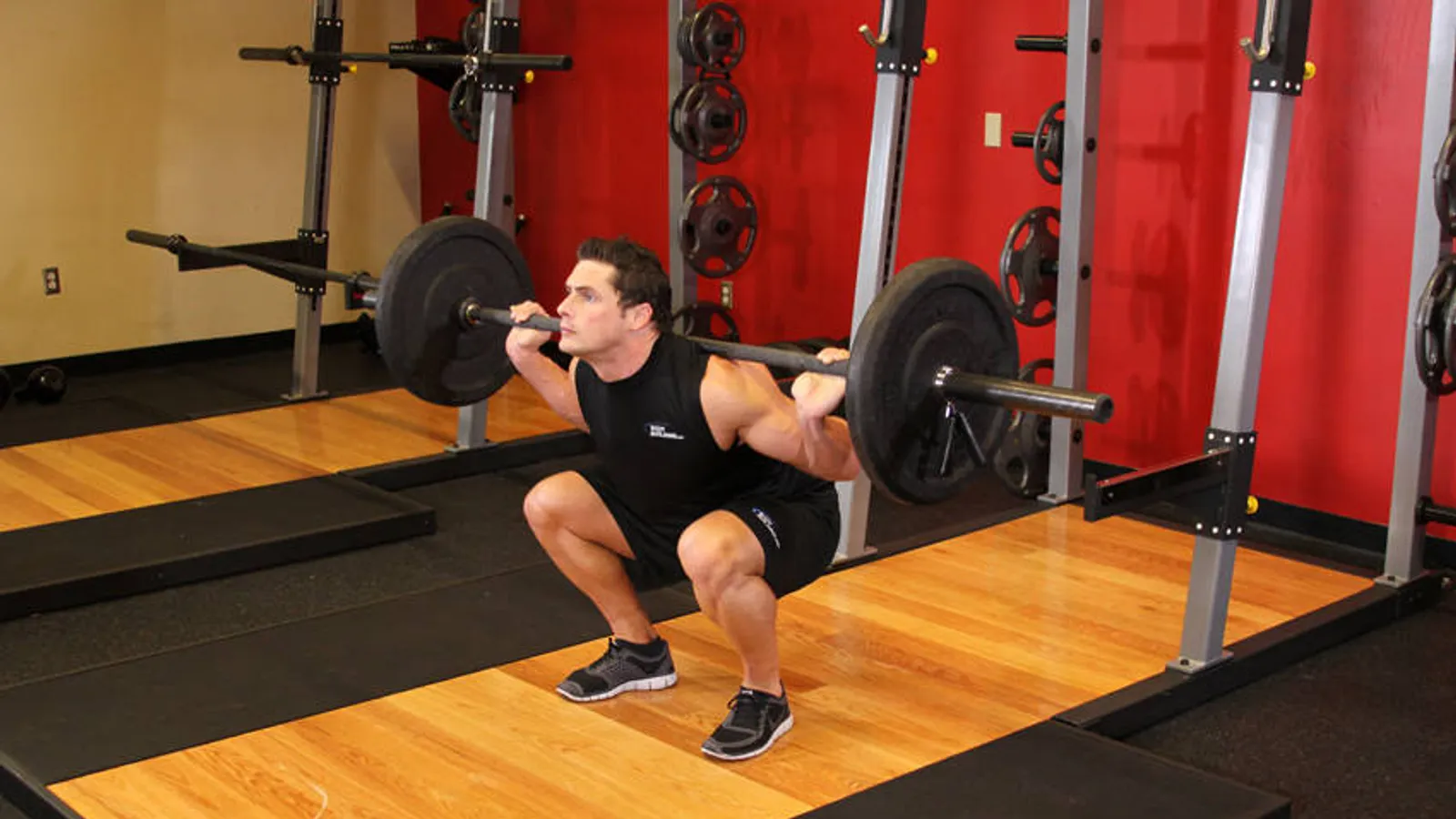
- Back squat: 3 sets of 8–10 reps
- Bench press: 3 × 8–10
- Barbell row: 3 × 8–10
- Overhead press (seated): 3 × 10
- Barbell curl: 2 × 12
- Plank: 3 × 45 seconds
Day B
- Deadlift: 3 × 6
- Incline bench press: 3 × 8–10
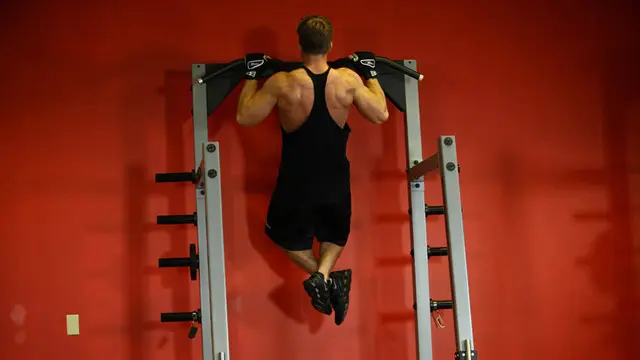
- Pull-ups: 3 sets of as many clean reps as you can
- Leg press: 3 × 12
- Lateral raises: 3 × 15
- Triceps pushdown: 2 × 15
Can't do a pull-up yet? Use the assisted pull-up machine or a band-assisted pull-up in that slot, or follow the steps in your first pull-up.
Day C
- Front squat: 3 × 8
- Dumbbell bench press: 3 × 10
- Seated cable row: 3 × 10
- Romanian deadlift: 3 × 10
- Hammer curl (cable with a rope): 2 × 12
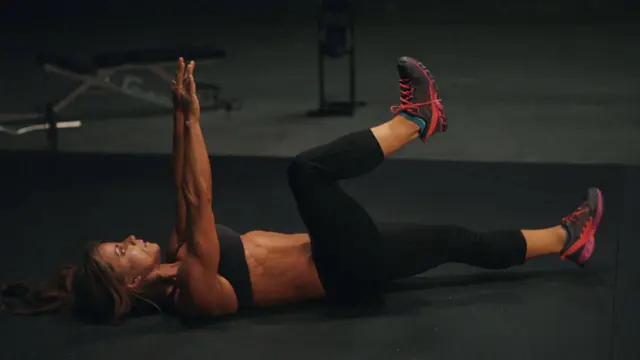
- Hanging leg raise: 3 × 12 (bend your knees if straight legs are too hard)
Rest 90–120 seconds between sets of the big lifts and about a minute on the small ones. That's in line with the 1–2 minutes the ACSM suggests when the goal is building muscle.3
Across the week, your chest, upper back and thighs each get 9 working sets. A review of 15 studies found a graded dose-response: the more weekly sets a muscle got, the more it grew.5 Nine sets per muscle is a solid starting dose that leaves room to add more as you get used to training.
How heavy should you lift?
The ACSM recommends that beginners use loads they can lift for about 8–12 reps,3 and most of the targets in this plan fall in or near that range. In your first week, learn each movement with an empty bar or light dumbbells, and watch the exercise's demo before you start. After that, pick a weight you could lift for 2–3 more reps than the target with good form.
You don't have to push every set to total failure. A review of 15 studies found no evidence that training to the point where you can't complete another rep builds more muscle than stopping short of it.6 Leaving a rep or two in reserve also makes it easier to keep your technique clean while you're still learning the lifts. The sets should still feel hard, though: the NHS describes the right effort as working to the point where you need a short rest before you can repeat the exercise.2
How to progress
Your body adapts, so the weights have to go up gradually. The rule in the program is simple: when you can do every set at the top of the rep range with good form, add a little weight next session. The ACSM puts it the same way, recommending a 2–10% increase in load once you can do one or two reps more than your target.3
For example, if you squat 3 × 8–10 with 40 kg and manage 10, 10 and 10, go up to 42.5 kg next time and work your way back up from 8 reps. Smaller lifts like curls and lateral raises progress more slowly. If the next dumbbell is too big a jump, add a rep or two before moving up. Write down every weight and rep so you always know what to beat.
Free weights or machines?
The plan uses barbells and dumbbells, but a machine is a fine substitute while you learn, or if a lift doesn't suit your body. A 2023 meta-analysis found no difference between free-weight and machine training for strength or muscle growth when the two were compared directly. People did get best at the type of equipment they trained with.7 A chest press machine can stand in for the bench press, for example, or a leg press for the front squat.
Women: same plan, same rules
You don't need a separate routine for women. A meta-analysis of studies that put men and women on the same resistance training program found that both gained muscle and lower-body strength at a similar rate, and women made larger relative gains in upper-body strength.8 Start with weights that suit you and progress by the same rules.
Stay safe while you learn
- If you haven't exercised for some time, or you have a medical condition or concerns, the NHS advises speaking to your GP first.2
- Warm up for 5–10 minutes, then do one or two lighter sets of your first lift before the working sets.
- Squat and bench press inside a power rack with the safety bars set just below the lowest point of the lift, or ask someone to spot you. Gym staff can show you how the rack works.
- If your back rounds on deadlifts or rows, the weight is too heavy. Lighten it and own the movement first.
- Muscle soreness a day or two after a session is normal when you start. Sharp or joint pain is not: stop that exercise and try a lighter weight or an easier version. Pain that keeps coming back is worth getting checked by a doctor or physiotherapist.
Your first month
- Week 1: do 2 sets of each exercise instead of 3, with light weights, and focus on technique. Note every weight you use.
- Week 2: move to the full 3 sets.
- Weeks 3–4: add weight whenever you hit the top of a rep range with good form.
- After that: stay on the plan as long as you keep making progress. When progress stalls despite good sleep and eating, or when you want to train four days a week, the 4-Day Upper/Lower is the natural next step, with about 80 sets a week instead of about 50. The ACSM's recommendation rises to 3–4 training days a week for intermediate lifters, which it defines as about six months of consistent training.3
You can follow the 3-Day Full Body day by day in the TrainSmart app, with an animated demo for every exercise. Three sessions a week, a little more weight when you've earned it, and your first month in the gym will set you up for the next year.